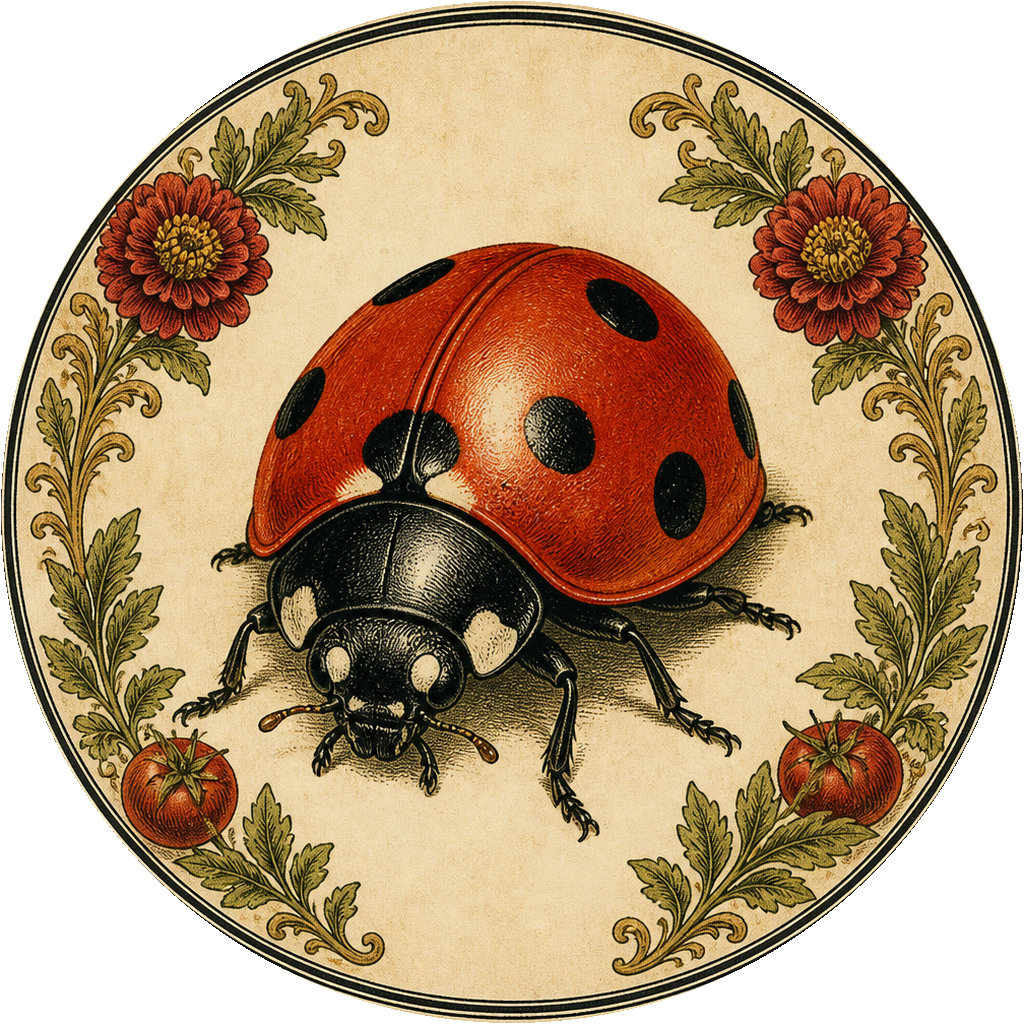
Food web
What they do in a yard
Predatory lady beetles cut aphids, scales, mites, and whiteflies. UF/IFAS calls them biological control agents and also says control is strongest with other predators and parasites. A yard is a web: lacewings, syrphid flies, tiny wasps, and birds. One beetle species does not empty a plant by itself.
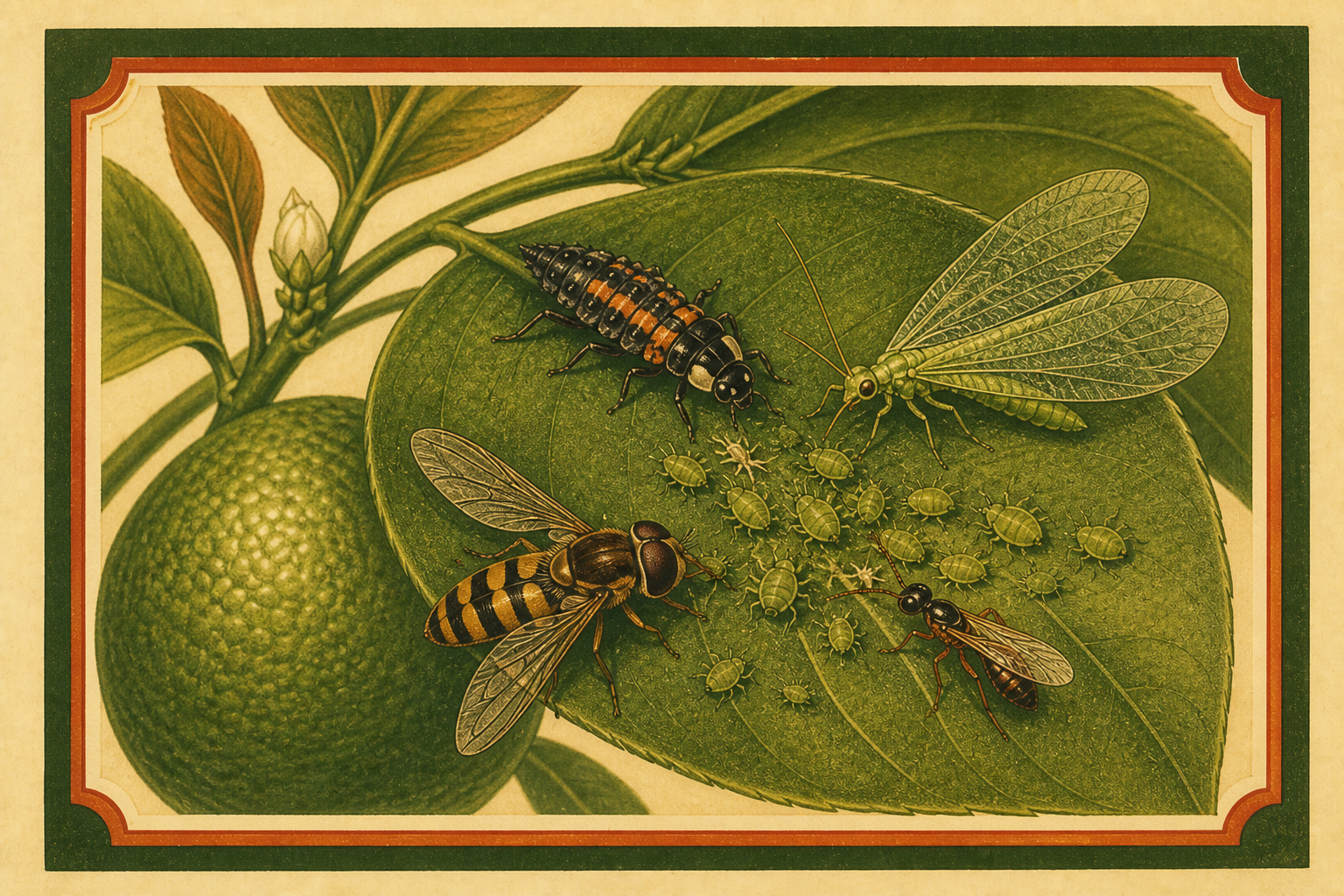
What they take
ENY-822 lists aphids first, then mites, scales, mealybugs, whiteflies, small caterpillars, beetle grubs, and eggs. Adults and larvae both feed. Numbers build where prey is dense.
Limits
They leave when prey crashes. They do not police every pest. Some Coccinellidae are not hunters. Harmonia can displace natives. Biological control is a pressure, not a switch.
The rest of the hunters
Lacewings, flower flies, predatory midges, ants, parasitic wasps, and mites share the same colonies. Killing ‘all insects’ on a stem kills the wasps that were already working. Look twice.
Questions
Will beetles save a plant overnight?
No. They reduce colonies over days. A collapsing plant still needs water, shade, and a decision about whether that crop belongs in this month’s heat.
Sources
- ENY-822 / IN120 Invertebrates as biological control agents. Larvae look like tiny alligators. Native Cycloneda sanguinea and Hippodamia convergens.
- EENY-170 / IN327 Lady beetles of Florida. UF/IFAS Featured Creatures. About 105 Coccinellidae in Florida.
- Ladybugs in Florida. UF/IFAS Extension. Predators of aphids; purchased beetles often fly away.