
Central Florida
A yard that holds in this heat
Orlando sits in USDA 9b and 10a. Winter is mild. Summer heat, daily rain, and nematodes write the plant list. Florida-Friendly Landscaping is the practice. Color that belongs on a crate here is zinnia, pentas, tomato, pepper, okra, and citrus.
Three paths
Climate
Zones and the year
Confirm 9b or 10a on the USDA map for the address, then follow the month plate for this band.
Practice
Florida-Friendly
Right plant, right water, mulch, and pests named before any product comes off the shelf.
Color
Flowers and crops
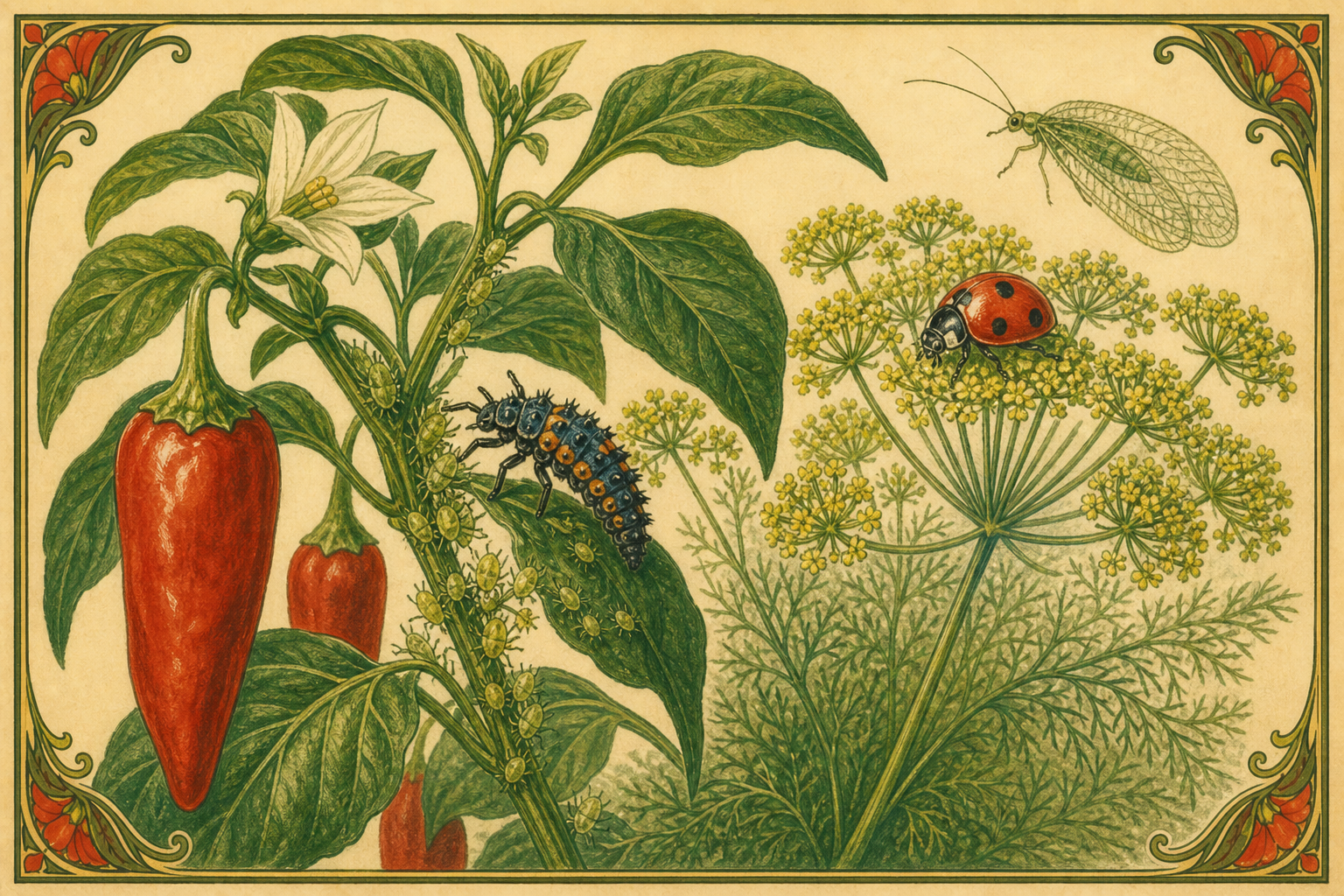
What actually holds in this heat, and where aphids — and the beetles that hunt them — show up.
Heat and rain
Afternoons over 90°F and a wet summer are the Central Florida pattern. Fungus, chewing insects, and bolted herbs follow. Tomatoes set in late winter into spring and again in fall. Okra, pepper, and sweet potato take the heat. Lady beetles hunt through the warm months; Harmonia looks for wall cracks when nights cool.
Garden lessons
Grow
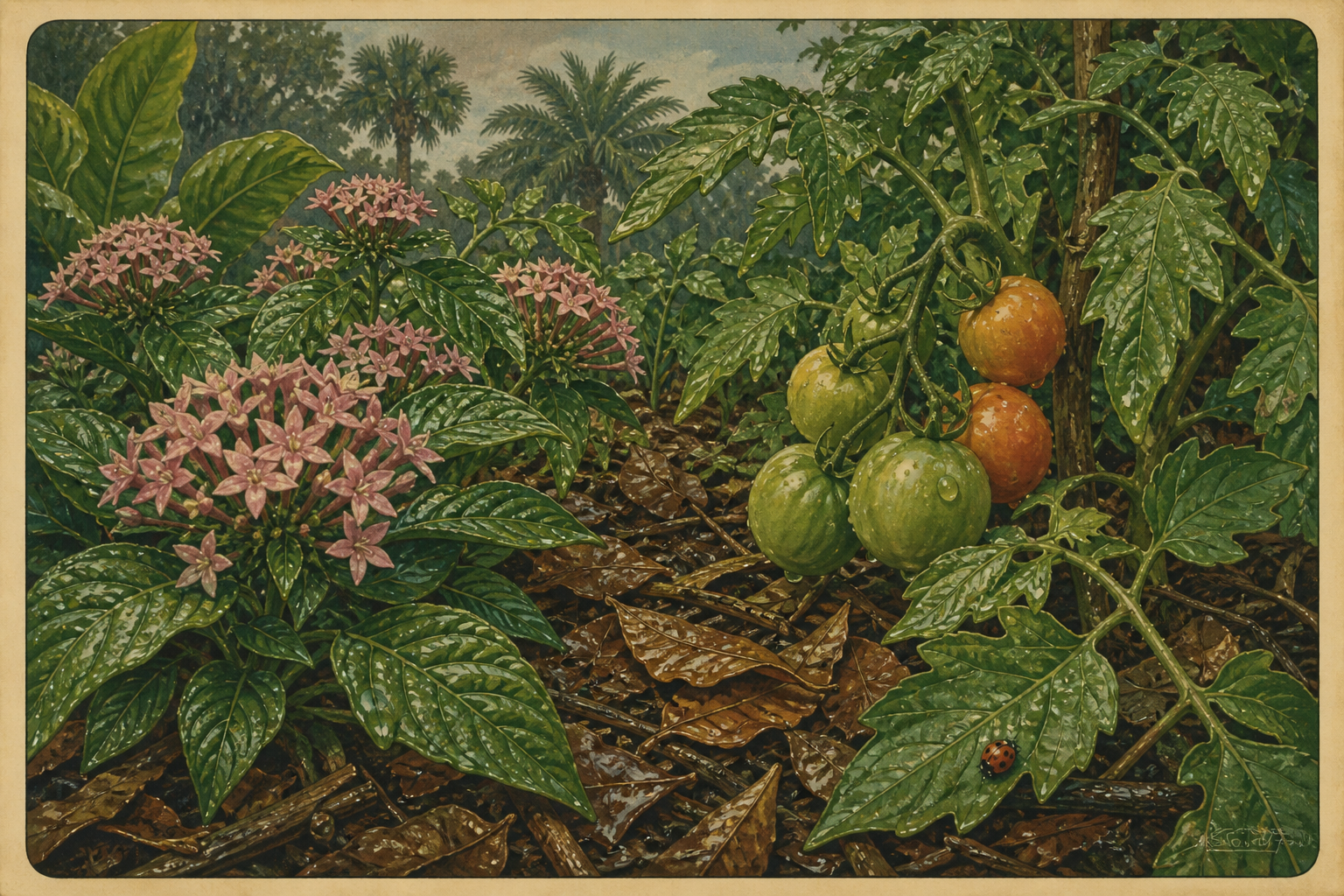
Climate
Central Florida zones
USDA 9b and 10a, heat, rain, and why an Orlando year is not a Michigan year.
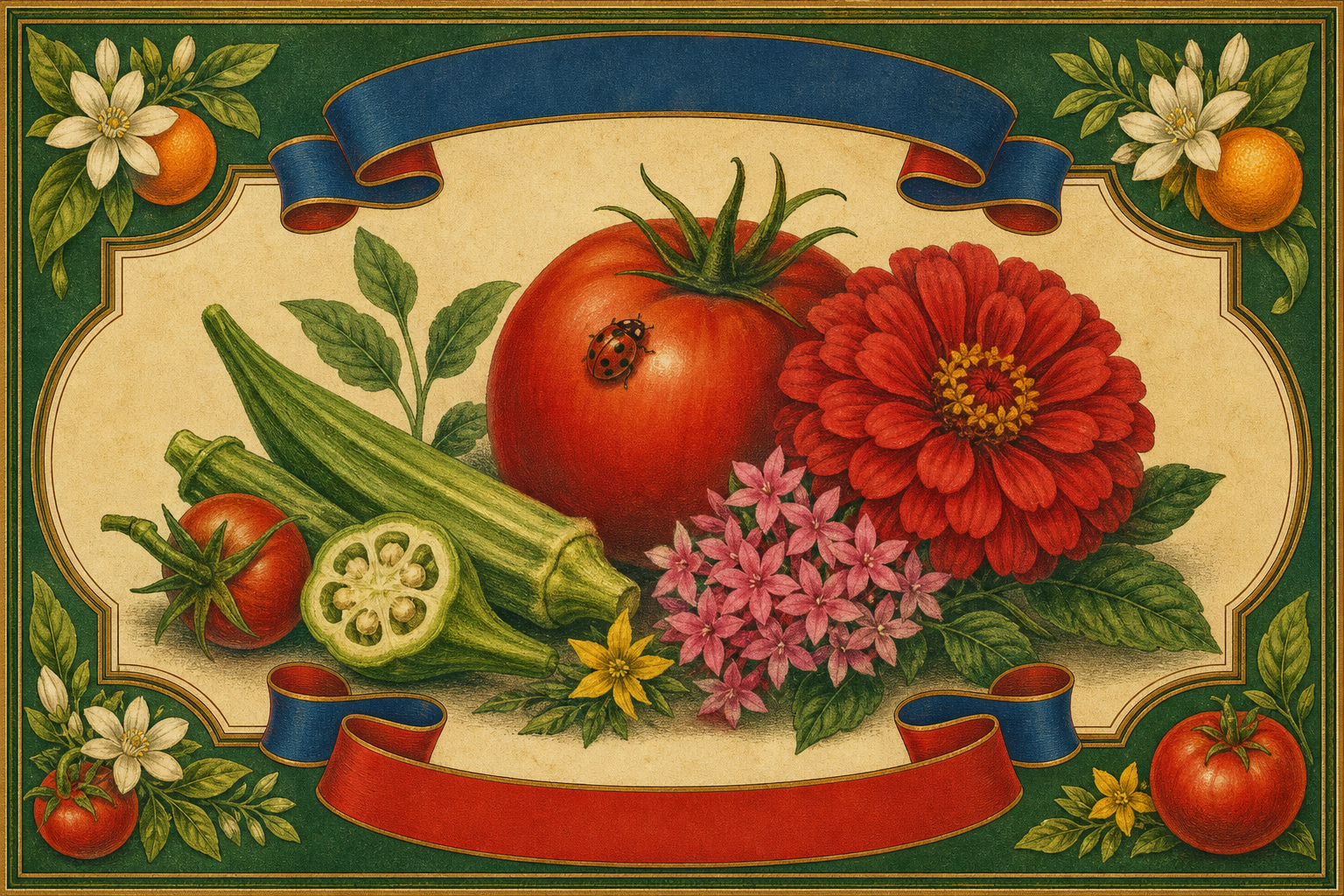
Practice
Florida-Friendly Landscaping
The nine UF/IFAS principles applied to a Central Florida yard that also wants lady beetles.
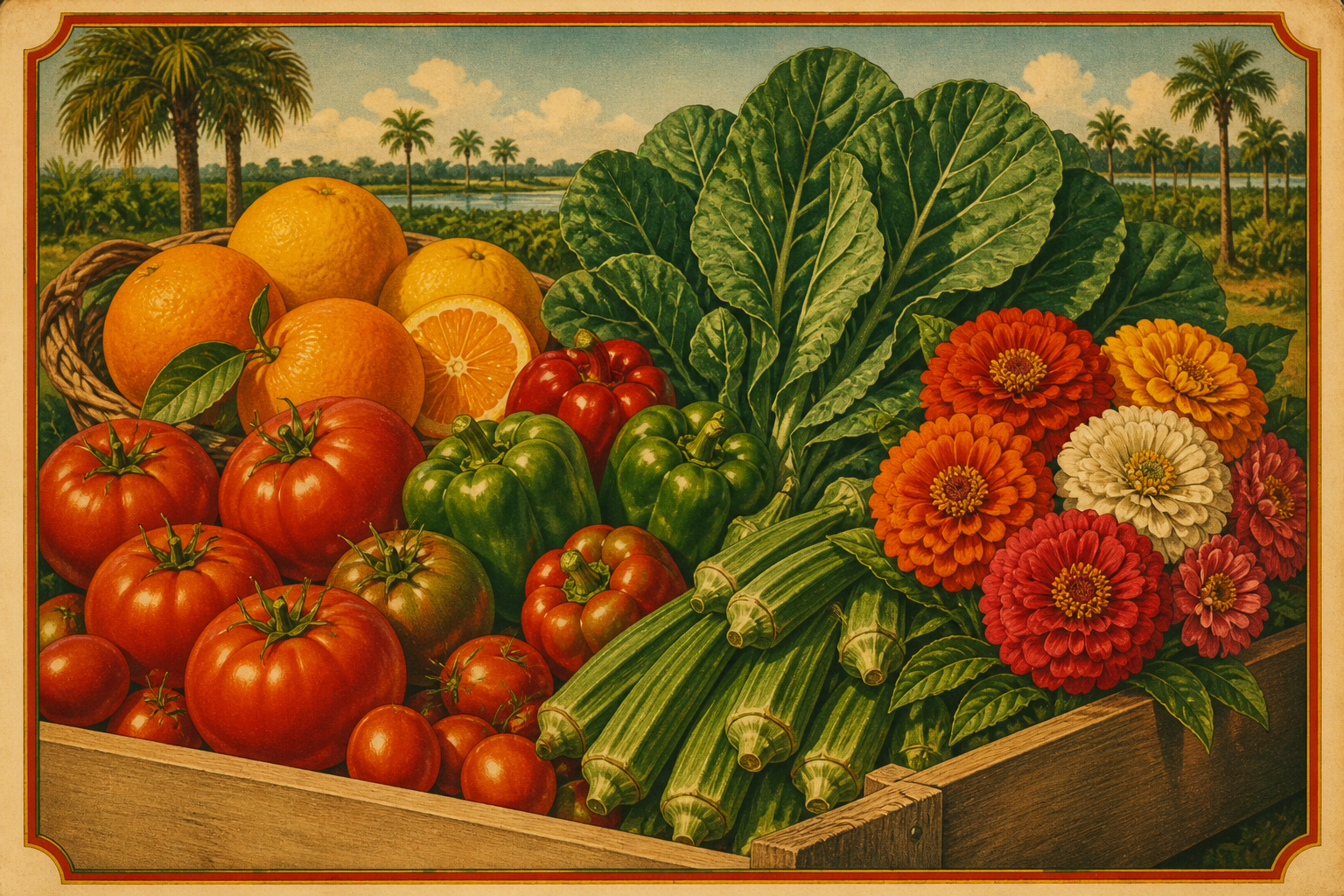
Color
Flowers and colorful crops
Zinnias, pentas, tomatoes, okra, peppers, and citrus as Central Florida crate-label subjects.
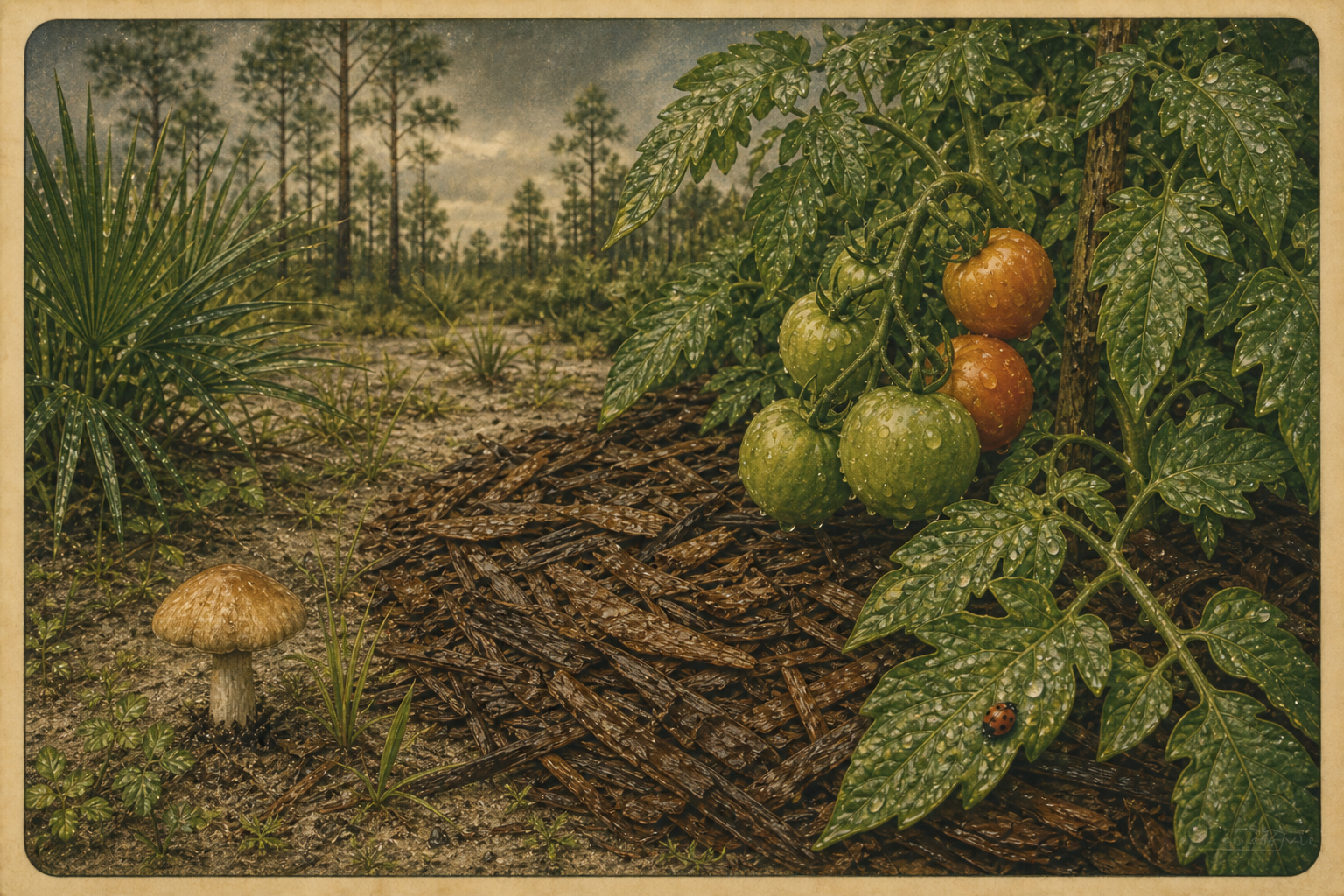
Ground
Soil, mulch, and rain
Sandy Central Florida soil, summer water, and the fungus that follows a daily overhead spray.
IPM
Yard spray and hunters
Identify the insect, keep the hunters, and treat one plant if a product is actually required.
Questions
Can the yard plant tomatoes in June?
Central Florida’s reliable tomato windows are late winter into spring and again in fall. Summer fruit sets poorly in night heat. Read Gardening Solutions vegetables.
Where is the official calendar?
On the year plate, pointing at Vegetable gardening in Florida.